Top 5 Materials Used in Hood Catches and Their Advantages
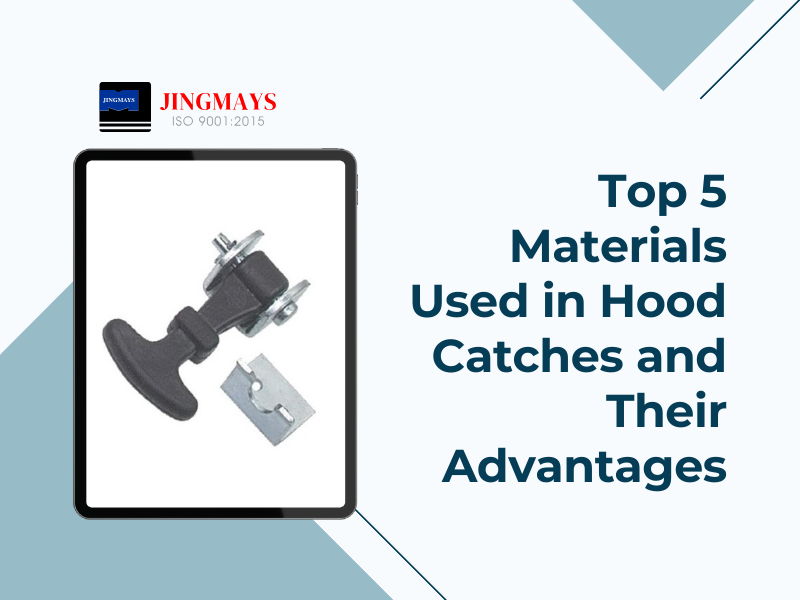
At Jingmays Industrial Co., Ltd., we specialize in the manufacturing of high-quality latches and handles, including hood catches used across automotive, agricultural, marine, and industrial applications. The performance of a hood catch doesn’t depend solely on its design—it heavily relies on the material used. Different environments and applications require specific material properties to ensure safety, durability, and functionality.
In this article, we will explore the top 5 materials commonly used in hood catch manufacturing and explain the advantages of each, helping our customers choose the most suitable solution for their applications.
1. Stainless Steel
Stainless steel is one of the most popular choices for hood catches due to its exceptional resistance to corrosion and oxidation. At Jingmays, many of our folding T-handle and hood catch products are manufactured using high-grade stainless steel.
Advantages:
-
Excellent corrosion resistance, ideal for outdoor and marine environments
-
High tensile strength ensures structural integrity
-
Low maintenance and long-lasting appearance
This makes stainless steel hood catches perfect for applications in trucks, boats, and industrial machinery where exposure to moisture or harsh chemicals is common.
2. Zinc Alloy
Zinc alloy offers a good balance between strength, cost-effectiveness, and surface finish. It is widely used in die-casting and allows for intricate shapes and compact designs.
Advantages:
-
Cost-efficient compared to stainless steel
-
Excellent surface finish, suitable for chrome plating
-
Good corrosion resistance with proper coatings
At Jingmays, our zinc alloy hood catches and handles are often chrome plated for enhanced aesthetics and rust protection, making them ideal for automotive interiors and enclosed compartments.
3. Steel with Powder Coating
Steel is a robust material often used when high mechanical strength is required. To improve corrosion resistance, steel hood catches are typically finished with powder coating or galvanization.
Advantages:
-
High mechanical strength and impact resistance
-
Cost-effective for heavy-duty applications
-
Powder coating adds protective and aesthetic value
This material is suitable for rugged applications such as construction equipment or agricultural vehicles, where strength is prioritized over appearance.
4. Aluminum
Aluminum is a lightweight yet corrosion-resistant material, making it suitable for applications where weight saving is critical, such as in aviation and racing vehicles.
Advantages:
-
Lightweight—reduces overall vehicle or equipment weight
-
Natural corrosion resistance
-
Excellent thermal conductivity for specific applications
Though less commonly used in standard commercial vehicles, aluminum hood catches may be preferred in specialized machinery or performance-driven industries.
5. Nylon and Reinforced Plastics
For non-load-bearing applications or where cost and weight are major concerns, engineered plastics such as nylon are used. These materials can be reinforced with glass fibers to enhance strength.
Advantages:
-
Highly corrosion-resistant, even in chemical environments
-
Lightweight and easy to mold into complex shapes
-
Noise dampening and vibration resistance
Plastic hood catches are commonly found in light-duty vehicles, recreational equipment, and areas not exposed to high mechanical stress.
Why Material Selection Matters
At Jingmays Industrial Co., Ltd., we understand that material selection is not a one-size-fits-all decision. Choosing the right material for your hood catch depends on:
-
Environmental conditions (humidity, salt, chemicals)
-
Mechanical load and vibration
-
Aesthetic and finishing requirements
-
Cost-performance balance
We work closely with clients to provide customized hood catch solutions that meet their specific operational and budgetary needs. Whether you're looking for premium stainless steel options for marine use or cost-effective zinc alloy parts for mass production, we have the expertise and manufacturing capabilities to deliver reliable and consistent quality.
Partner with Jingmays for Quality Hood Catches
As a trusted manufacturer and exporter of industrial hardware, Jingmays Industrial Co., Ltd. offers a wide range of hood catches, folding T-handles, and locking systems. We take pride in using high-quality materials, precision manufacturing processes, and surface treatments that meet global standards.
Contact us today to learn more about our hood catch products or to request a sample tailored to your application needs.
Frequently Asked Questions (FAQ)
Q1: What is the most corrosion-resistant material for hood catches?
A1: Stainless steel, particularly 304 or 316 grades, offers the highest resistance to corrosion, especially in marine or outdoor environments.
Q2: Can I request custom material specifications for hood catches?
A2: Yes. At Jingmays, we offer OEM and ODM services and can accommodate custom material, size, finish, or load-bearing requirements.
Q3: Are plastic hood catches reliable for long-term use?
A3: Yes—for non-heavy-duty applications. Reinforced plastics such as glass-filled nylon are durable, lightweight, and resistant to chemicals and corrosion.
Q4: Which material is best for heavy-duty industrial equipment?
A4: Steel with powder coating or stainless steel are both excellent choices due to their high strength and resistance to impact and wear.
Q5: Do zinc alloy hood catches rust easily?
A5: Not when properly treated. Our zinc alloy hood catches are chrome plated or treated with anti-corrosion coatings to ensure long-lasting performance.